
Lithography is a process of reproducing a drawing by printing it in reverse on limestone. This printing technique was invented by the German Alois Senefelder in 1799 and popularized in France in the early 19th century. Throughout the century, lithography was assimilated by renowned artists such as Delacroix, Géricault and Manet. It made an artist’s work accessible at lower cost. That’s why, in the 20th century, a veritable lithography market was established in France: great artists such as Pablo Picasso, Marc Chagall and Henri Matisse created numerous works in lithography, whether for illustrated books, posters or albums. These productions contributed to the popularity and popularity of the technique.
On the market, prices from one lithograph to another can vary from several thousand to hundreds of thousands of euros. This is due to many factors, not least the artist’s reputation. So what are the criteria for estimating the value of a lithograph?
Unsurprisingly, the fame of the creator is a consubstantial element in the value of the lithograph. As with all works of art, the popularity of the artist increases the price. For example, prints by Pablo Picasso or Marc Chagall are recognized as being of very high value.
But the fame of its author is not enough to set the price of a print! It’s the quality of the work that counts. Lithographs, engravings and etchings, made on paper, are very fragile. They are sensitive to sunlight and dust, and can be torn. If a work is poorly preserved, its value plummets instantly, even if it was created by Pablo Picasso or Joan Miro. It is therefore essential to observe the color and condition of the paper before setting a price. The value of two lithographs from the same series can vary dramatically, depending on how well or poorly they have been conserved.
The quality of a print is also an important indicator of its value. A good command of the lithography technique is essential.
Subscribe to our news
To receive invitations to our openings
The authenticity of a print is undoubtedly a guarantee of its value. Today, however, there are more and more problems of falsification, which is why the certification of a work helps to reassure the potential buyer of the fair value of his acquisition. This growing tendency to certify the authenticity of a print underlines the importance of the expert’s role in discerning the real from the fake. While an expert’s work on a print does not increase its value, it does guarantee that the price is right.
The exclusivity of a lithograph is also a factor in judging its value. As prints are not unique works, a limited edition confers rarity and originality. There are two characteristics that define the exclusivity of a print: series and edition. In lithography, the average print run for a series is considered to be one hundred copies. This is why it’s important to find out more about the artist and the work in question, since a very large print run, while not diminishing the quality of the work, can reduce its monetary value. Indeed, it seems important to point out that for a limited edition art print, the lithograph number (e.g. 75/100) has no real influence on the work’s value. This is because the print quality is no different from one lithograph to another. In fact, the stone retains the same properties as when it was first printed.
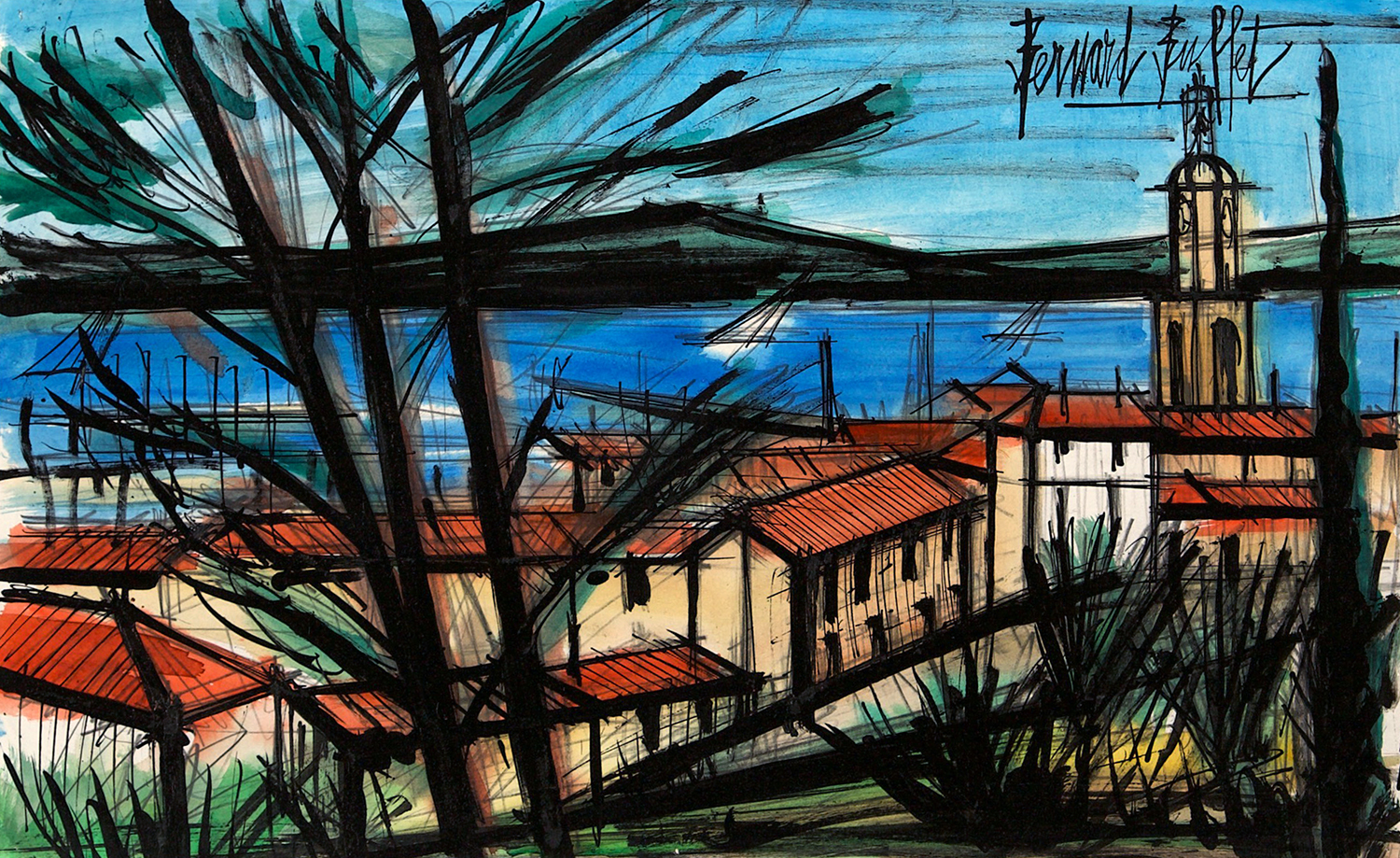
All elements outside the image, in the margin or on the back of lithographs, etchings or engravings are important. The signature is a guarantee of the print’s authenticity, and as it is not systematic, it increases its value as it can make it unique among all the copies in the series.
There are also a number of indications, usually in pencil: sketches, countersignatures, artist’s annotations, and the print may also be enhanced by hand. All these details make it possible to better situate the work in the creative process, and are therefore an added value.
Annotations on works can be of three kinds. They are often initials, but can also be found written in full. BAT stands for “bon à tirer” (ready to print), written by the artist on the first print, indicating that he or she is satisfied with the first print run, and therefore accepts that the lithographer produce the series as planned. Notifying the original printing of a series, a lithograph with a “BAT” inscription is more valuable than a numbered one.
In addition to numbered prints, there are also additional prints marked E.A. (épreuve d’artiste) or H.C. (hors commerce), for example. These proofs, originally intended for the artist and the contributors to each print run, may appear on the market after a certain time, as a result of deaths and inheritances. In the field of printmaking, artist’s proofs or hors commerce have the same monetary value as numbered proofs.
In addition to these elements of analysis, centered on the works and their creator, we must not forget that lithography, etching and etchings are part of the art market, and more specifically the print market.
As a result, their value fluctuates in two ways. The first is that of an economic, social and political context that influences the behavior of potential buyers. This leads to a more measured commitment in acquisition decisions on the part of collectors. In other words, at times, a large number of prints by the same artist are offered for sale, which can limit a certain enthusiasm, as the works are less rare from the outset. Conversely, the sale of exceptional pieces can drive up prices in the face of abundant demand. We must also bear in mind that the art world is subject to fashions, which change collectors’ interest in certain artists. While these phenomena do not in themselves change the value of lithographs, they can lead to price adjustments by gallery owners.
Even so, the print market faces competition, particularly from photography, which attracts a younger audience. In fact, the photography market is similar to the print market in that works are subject to the same principle of exclusivity, and are aimed at people with budgets similar to those of lithograph buyers.
Nonetheless, it would appear that the appeal of this market has been revived, notably by the interest shown in it by French and foreign museums, but also by the dynamism shown by gallery owners. Some are shifting their activities to the Internet, while others are joining forces to organize fairs and exhibitions, in order to maintain this emulation and bring works to a wider public.
A number of factors must therefore be carefully analyzed to determine the value of a lithograph, and they are not just artistic. It is the combination of the artist’s creativity, technical mastery, exclusivity, justification, market conditions and socio-economic context that gives each print its value.